
All In Together: Strengthening Our Safety Culture Every Day
All In Together: Strengthening Our Safety Culture Every Day
Construction Safety Week comes around once a year to unite the industry around a critical cause. It reminds us to pause, evaluate our environments and refocus our efforts on protecting our people. At Harris, safety is foundational to who we are every single day.
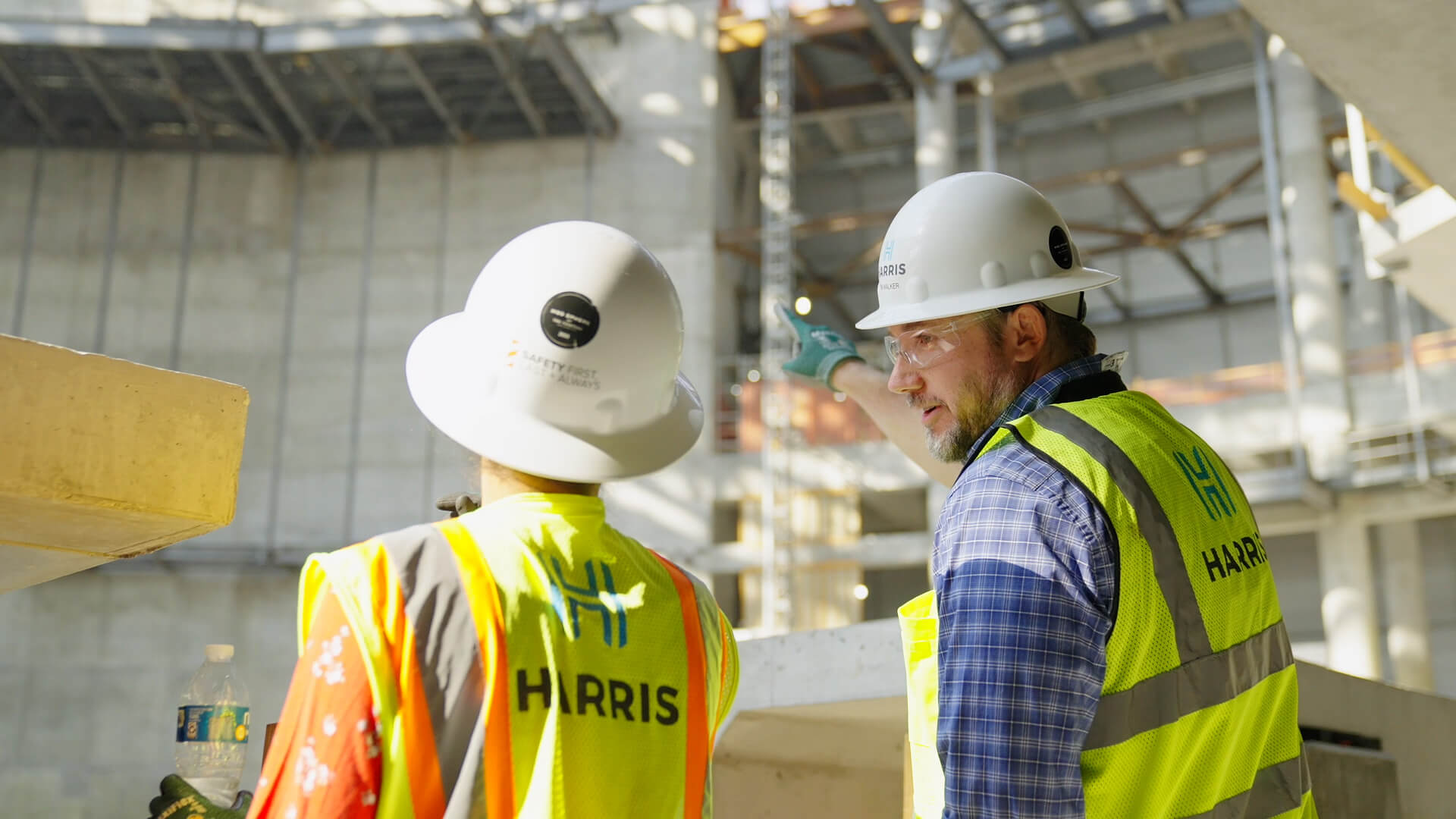
Safety First, Last + Always stands as our absolute commitment to ensuring every employee ends the workday in the exact same health they began it. Construction carries inherent risks. Heavy machinery, elevated heights and complex electrical systems require intense focus and rigorous planning. We know that robust safety protocols protect our people and power our continuous improvement.
As a Zero-Injury Workplace, our target on every job is zero recordables. We understand that even one injury is too many. Achieving this goal requires proactive planning, extensive training and a culture where everyone feels personally accountable for safety.
All In Together: Recognize Respond, Respect
This year’s Construction Safety Week theme, “All In Together,” reinforces an important truth about job site safety: keeping people safe is a shared responsibility. Safety is not owned by one role, one team or one company. It depends on every person on a jobsite staying engaged, looking out for one another and committing to the work being performed safely every day.
A major focus of this year’s initiative is preventing serious injuries and fatalities (SIFs) tied to high-energy, high-hazard and STCKY (Stuff That Can Kill You) activities. These are the types of risks that carry the potential for life-altering or fatal outcomes and demand constant awareness, planning and control.
To support that effort, this year’s theme is built around three core pillars: Recognize, Respond and Respect. These principles help guide how teams identify hazards, implement protective measures and reinforce a culture where every risk is taken seriously.
Recognize the Hazards
Safety starts with recognizing the presence and impact of high-energy and high-hazard activities before work begins. That process starts with thorough planning, evaluating the work area, identifying potential risks and ensuring the right procedures and protections are in place.
Recognition continues throughout the workday. Daily pre-task planning helps teams identify changing site conditions, new hazards and potential exposures before tasks begin. By actively recognizing STCKY activities and other risks, teams are better equipped to prevent incidents before they occur.
Respond with Direct Controls
Once hazards are identified, the next step is to respond by putting direct controls in place. This means taking clear, immediate action to reduce or eliminate risk before work proceeds.
Controls may include adjusting work plans, implementing specialized safety measures, securing equipment, isolating hazardous energy sources or modifying workflows to create safer conditions. Ongoing safety audits, field observations and toolbox talks also help reinforce awareness and ensure teams remain aligned as conditions evolve.
When incidents or close calls occur, they are thoroughly reviewed so lessons learned can be shared and future risks reduced.
Respect Every Hazard, Every Person and Every Role
Respect is at the core of a strong safety culture. That means respecting every hazard, every person, every life and every role in keeping jobsites safe.
Construction environments involve powerful equipment, complex coordination and constantly changing conditions. Approaching that work with respect means never becoming complacent and understanding that every decision can impact the wellbeing of others.
It also means creating a culture where everyone is empowered to speak up, raise concerns and look out for one another. Safety is a shared responsibility, and maintaining safe jobsites requires every person to stay engaged and committed every day.
The Harris Approach to a Zero-Injury Workplace
We back up our safety philosophy with robust resources and strict protocols. At Harris, our proactive approach applies core strategies to support a Zero-Injury Workplace.
We maintain a 30-plus-member safety team dedicated to overseeing operations across our regional offices. This team tailors safety plans to each specific job site, ensuring our crews receive relevant and timely information. Throughout the year, Harris employees receive continuous training to stay current with the latest injury prevention protocols.
We place a massive emphasis on fall protection and continuously review our Life Saving Rules. We also empower every team member through Stop Work Authority. If any employee sees an unsafe condition, they have the right and the obligation to halt work immediately. We fully support this authority without question or hesitation.
Additionally, we maximize prefabrication to improve safety. By building complex components in our controlled manufacturing facilities, we reduce the amount of time our crews spend performing high-risk tasks on active construction sites. Prefabrication limits exposure to unpredictable elements, reduces the need for elevated work and allows us to install systems safely and efficiently.
Safety by the Numbers
Our safety numbers speak for themselves. We track our performance rigorously and consistently outperform industry averages on key safety measures.
One of the most important metrics in the construction industry is the Experience Modification Rate. EMR represents a company’s claims history and safety record compared to other businesses in the same industry. Insurance companies use this metric to gauge risk.
An EMR of 1.0 serves as the benchmark average for the construction industry. A number below 1.0 indicates a safety record better than the industry average. At Harris, our EMR reflects our relentless dedication to safe operations.
In 2025, our EMR was 0.44. These figures demonstrate that our safety programs work. They show that our training, planning and culture directly result in fewer accidents and a safer environment for everyone involved. For building owners and facility managers, partnering with a contractor that maintains an EMR this low ensures a secure job site and minimizes liability risks.
A Shared Commitment to Continuous Improvement
Construction Safety Week gives us a great opportunity to reflect on our practices, but the real work happens every day. Beyond pipe, duct and controls, our defining characteristic is personally caring for each other. We maintain a shared commitment to continuous improvement.
We encourage you to join us in continuing to strengthen a culture where safety remains at the forefront of everything we do. By integrating people, process and technology, we build safer projects that operate exactly as expected.
Categories: Blog